
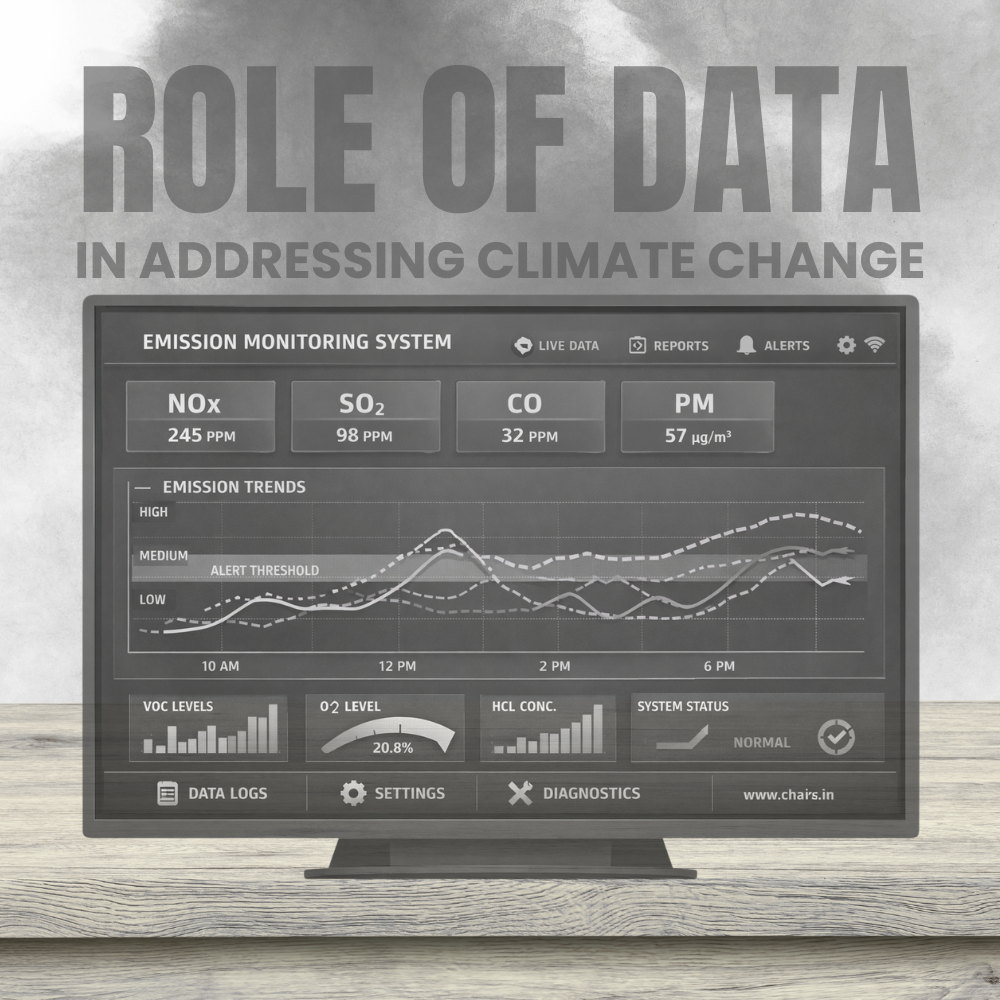
The Role of Data in the Fight Against Climate Change
Emissions Quantification | Air Quality Monitoring | Action From Impact
Climate change is currently a global concern. In fact, its impacts are very much localized. In the case of the Indian nation, the change is already manifest, ranging from the rise of air pollution to the tightening of emission standards. Notably, to fight climate change effectively, more than mere awareness is required. There is also a need to act based on proper data.
The Importance of Data in the Climate Debate
In cities like Delhi, Mumbai, and Bengaluru, the quality of air in the cities keeps fluctuating with respect to conditions of traffic jams, industrial releases, dust from constructions, and diesel-powered generators. Although awareness and governmental initiatives are important, meaningful efforts start only when the air pollution is measured with precision.
Without reliable data:
- Sources of pollution are assumptions
- Source-impact relationships remain unclear
- Compliance is more of a reactive process than a proactive one
The impact of climate change still remains a claim rather than conclusive evidence. It is at this point where emissions and air quality information becomes important.
Measuring Emissions: From Estimates to Actuals
Conventionally, many industries have relied on manual checks or estimated emission factors as the basis for reporting the level of their pollution. However, effective climate action requires precision.
In India, the regulatory bodies, such as the Central Pollution Control Board, CPCB, have now included continuous emission monitoring for certain sectors. This simply enforces a very fundamental principle:
“You can’t manage what you can’t measure.”
Accurate measurement of emissions thus allows industries to:
- Quantification of NOx, SO₂, CO, VOCs and particulate matter
- Anomaly detection of emission spikes in real time
Track trends rather than snapshots in data. Data transforms emissions from invisible outcomes into measurable, manageable variables.
Air Quality Monitoring: From Compliance to Responsibility
Air quality monitoring can no longer be confined within the factory boundaries. The urban population is directly exposed to the emissions from industries and combustion sources. This calls for a wide contemporary ambient air quality monitoring.
Across India:
- Power plants, boilers, and incinerators are increasingly monitored for
- Ambient pollution tracking for infrastructure and construction hubs
- Public institutions are expected to ensure cleaner surrounding air.
Continuous monitoring allows:
- Early warnings for abnormal levels of emissions
- It relates to preventive maintenance rather than post-violation action.
Better protection of workers and nearby communities Decisions are proactive instead of corrective with real-time air quality data.
Turning Measurement into Meaningful Impact
Many climate initiatives fail at the measurement stage. While sustainability goals are set, only a few initiatives deliver measurable outcomes.
Emission monitoring systems bridge the gap between intention and impact by helping industries:
- Ensure regulatory compliance
- Track and validate performance improvements
- Measure environmental impact in real terms
The question shifts from “Are we sustainable?” to “How much impact are we creating?”
Chakr in Pivotal Role in Informed Climate
The Chakr Emission Monitoring System has been designed for emission tracking, processing raw data to generate meaningful environmental information.
Important Capabilities:
- Integrated smart module monitoring 10+ gases in one compact unit
- Range: Large measuring scale with ranges from 0 to 100 PPM up to
- High accuracy data through ultra-low drift technology
- Data Recording for Internal Purposes
- Full adherence to the CPCB monitoring guidelines
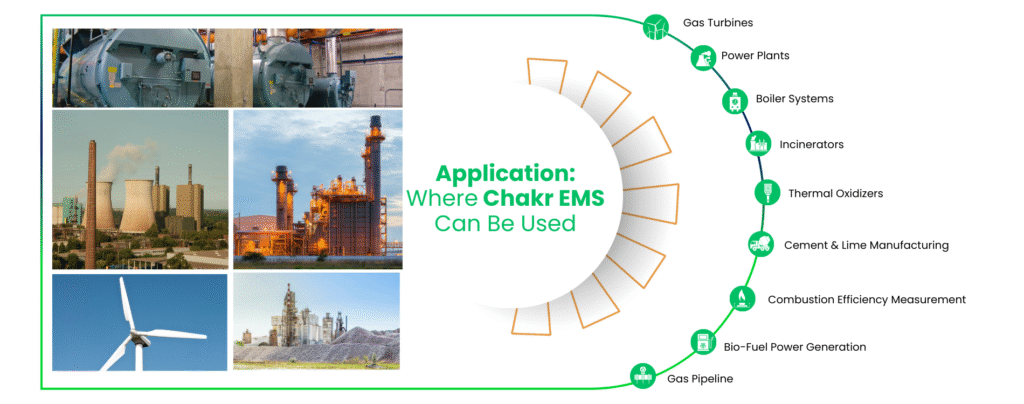
Applications-
The system supports OCEMS, CAQMS, and CAAQMS for various industries such as:
- Power plant and boiler systems
- This includes the generation
- Cement, Pulp & Paper Industries
- Gas Turbines and Incinerators Infrastructure
- Bio-Fuel Based Power Generation
Chakr empowers industries to shift from the realm of compliant monitoring to the domain of performance-based environmental stewardship,” states the website.
Data as the Basis for Solutions for Climate Change
Climate change cannot be dealt with through speculations and spot checks. It requires continuous monitoring of emission levels and visibility into air quality.
When emissions are given correct figures:
- The quality of the air improves systematically
- The difference between regulation and best practice reduces
The effects of climate change become concrete rather than symbolic Data does not only inform the existence of pollution; it informs the ability to act.
Conclusion: From Numbers to Climate Impact
“The fight against climate change will be won not only through innovation but also through accountability powered by data.”
Emissions are monitored, air quality is tracked, and insight needs to be turned into action. No longer a choice but an imperative: with effective monitoring systems in place, industries can drive cleaner air, stronger compliance, and measurable progress against climate change.