Why CPCB Recommended Labs Are Critical for RECD Compliance?
When it comes to Retrofit Emission Control Devices (RECD) for Diesel Generators, the margin for error is non-existent. The Central Pollution Control Board (CPCB) has established stringent mandates to curb industrial air pollution, making RECD installation a legal necessity in many regions. However, the hardware alone isn’t enough; its efficacy must be validated by CPCB-recommended laboratories. These specialized testing facilities serve as the ultimate gatekeepers of environmental standards, ensuring that a device actually delivers the 70% particulate matter reduction it promises. Utilizing a recommended lab is the only way to guarantee that your compliance documentation is legally airtight, protecting your enterprise from the heavy penalties and operational bans associated with non-conformity.
CPCB-authorized testing involves rigorous Type Approval and Conformity of Production (CoP) procedures that simulate real-world engine loads and exhaust temperatures. By choosing an RECD tested at these elite facilities, asset owners gain peace of mind knowing the device won’t compromise the performance or lifespan of their expensive DG sets. Furthermore, these labs provide the standardized certification required by state pollution control boards (SPCBs) during inspections. In an era where environmental regulations are tightening, relying on CPCB-recommended lab validation is not just a technicality—it is a strategic business move that ensures long-term operational continuity, environmental stewardship, and total regulatory immunity.
Difference Between CPCB I and CPCB II Standards
CPCB I (Stage I)
The Foundation: CPCB I Standards
Introduced in the early 2000s, CPCB I was India’s first major step toward regulating emissions from diesel generator sets. These norms focused on setting baseline limits for smoke density and particulate matter for engines up to 800 kW. Most generators manufactured during this era are purely mechanical and lack modern filtration, which is why they now require Retrofit Emission Control Devices (RECDs) to meet current air quality mandates in many industrial zones.
CPCB II (Stage II)
Industry Benchmark: CPCB II Standards
Implementation of CPCB II norms (starting around 2013-2014) brought a more stringent set of limits for NOx (Nitrogen Oxides) and HC (Hydrocarbons). These standards were the industry benchmark for nearly a decade, requiring better engine tuning & cooling systems. While CPCB II sets are significantly cleaner than CPCB I, they still fall short of the new CPCB IV+ requirements, making them the primary candidates for RECD installation to ensure legal operational.

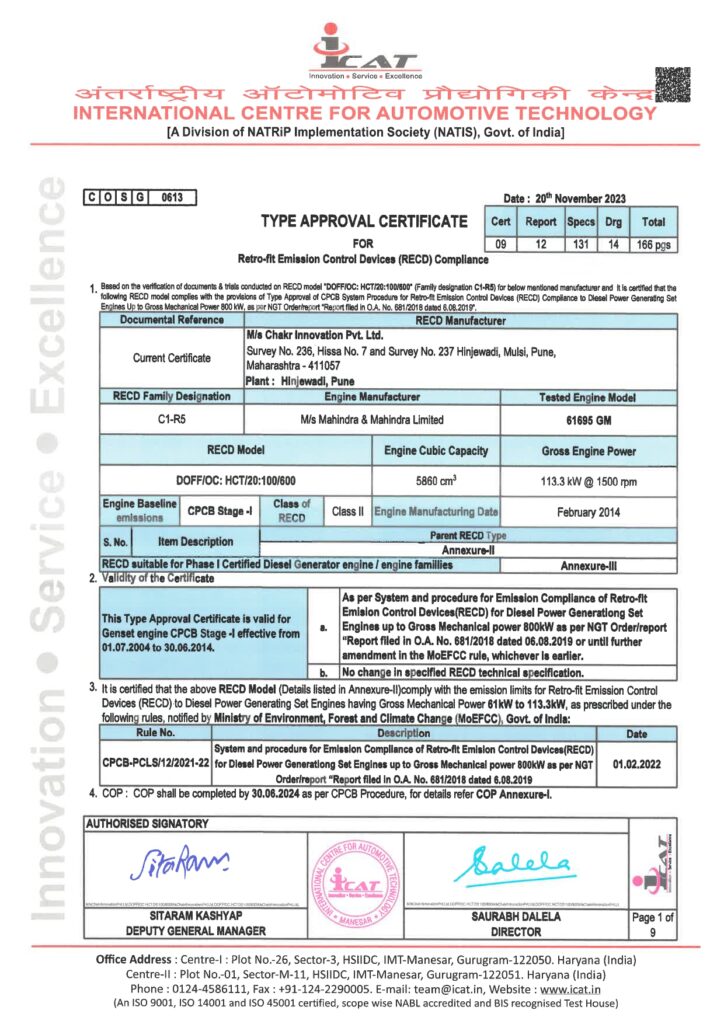
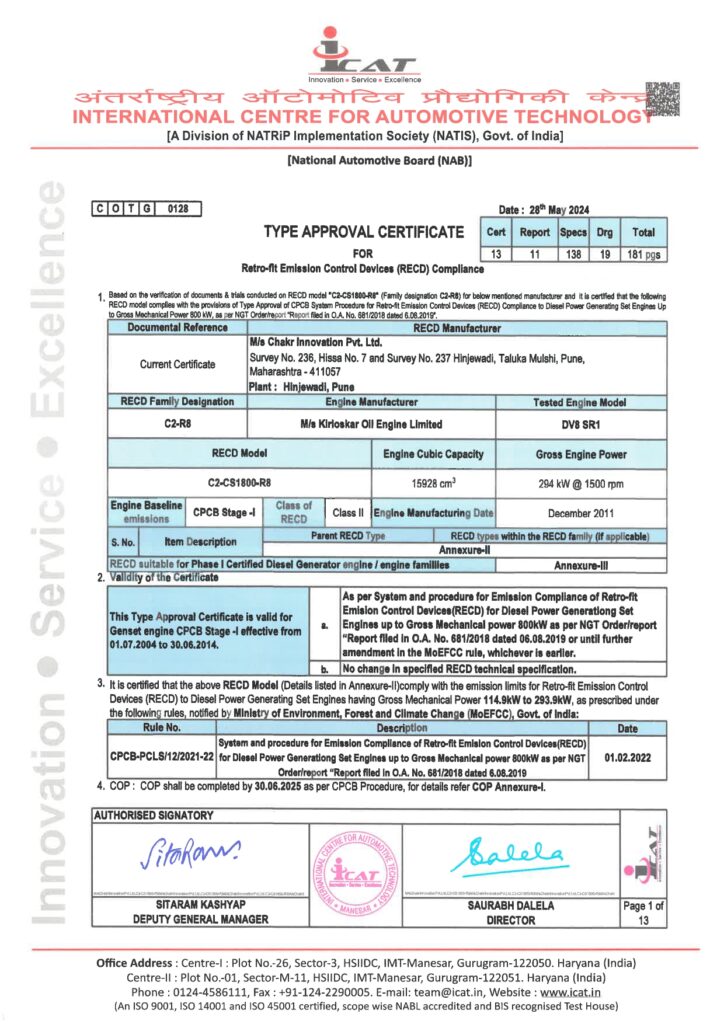
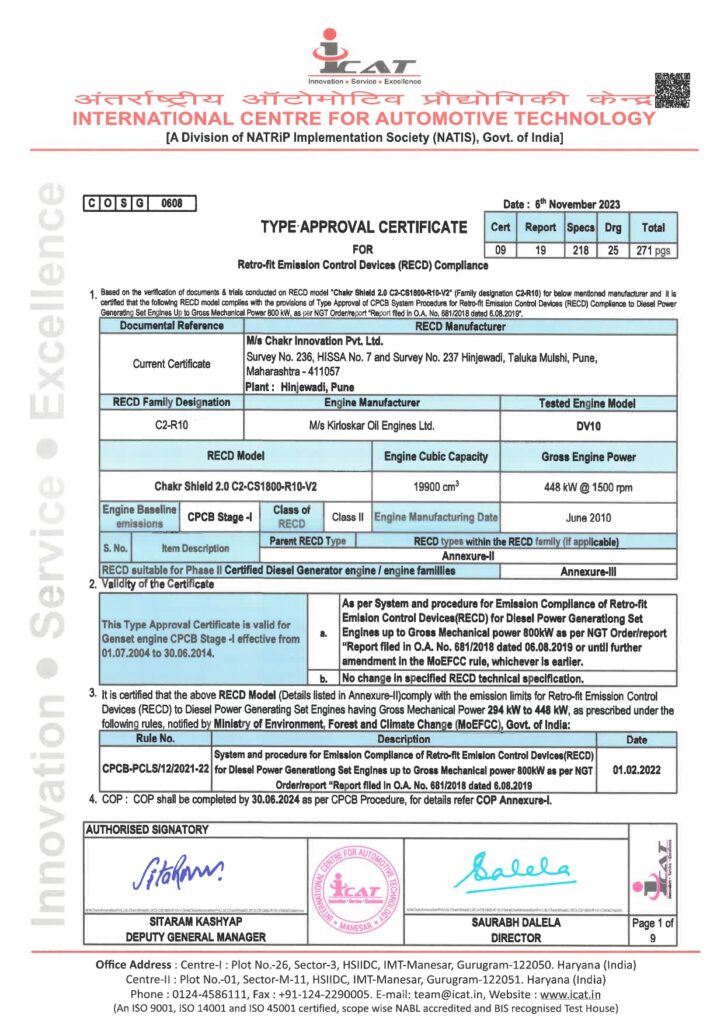
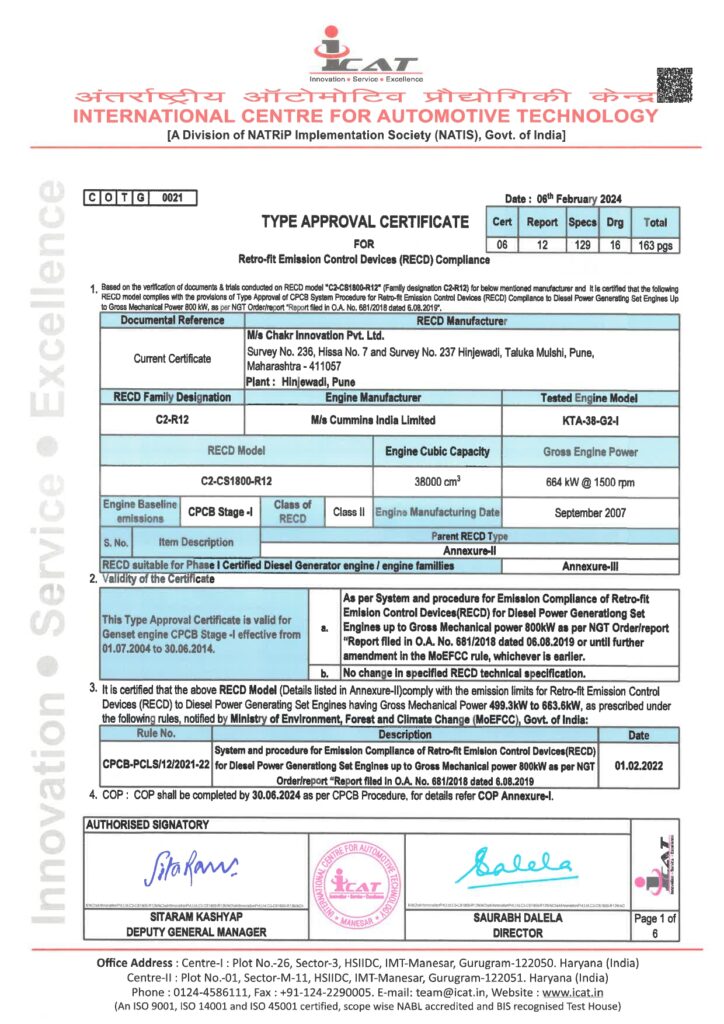
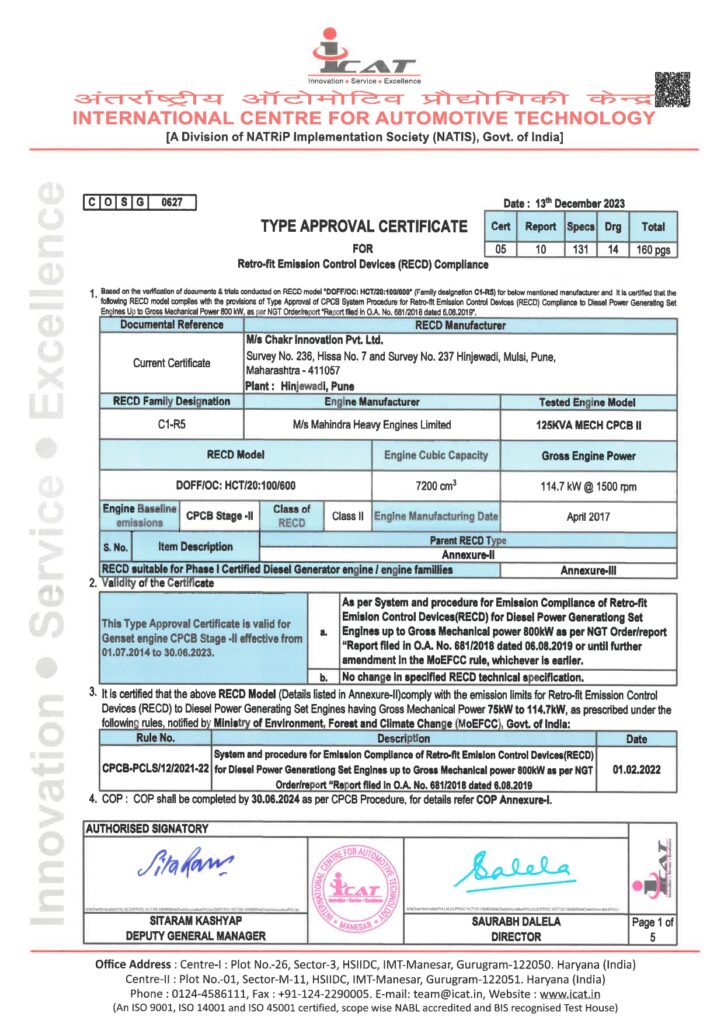
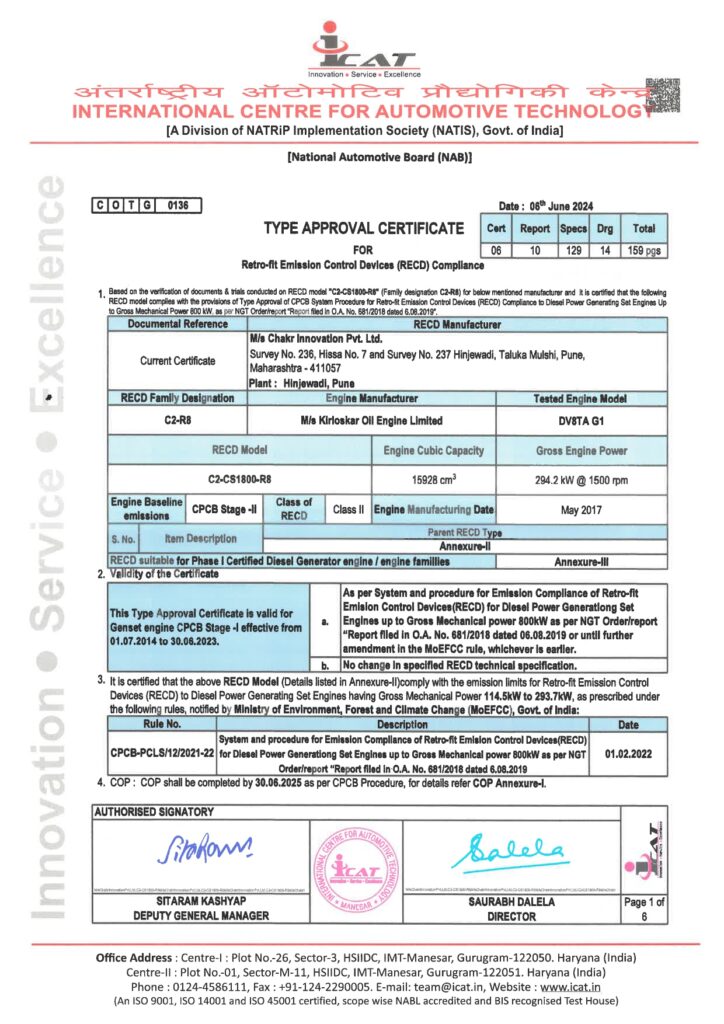
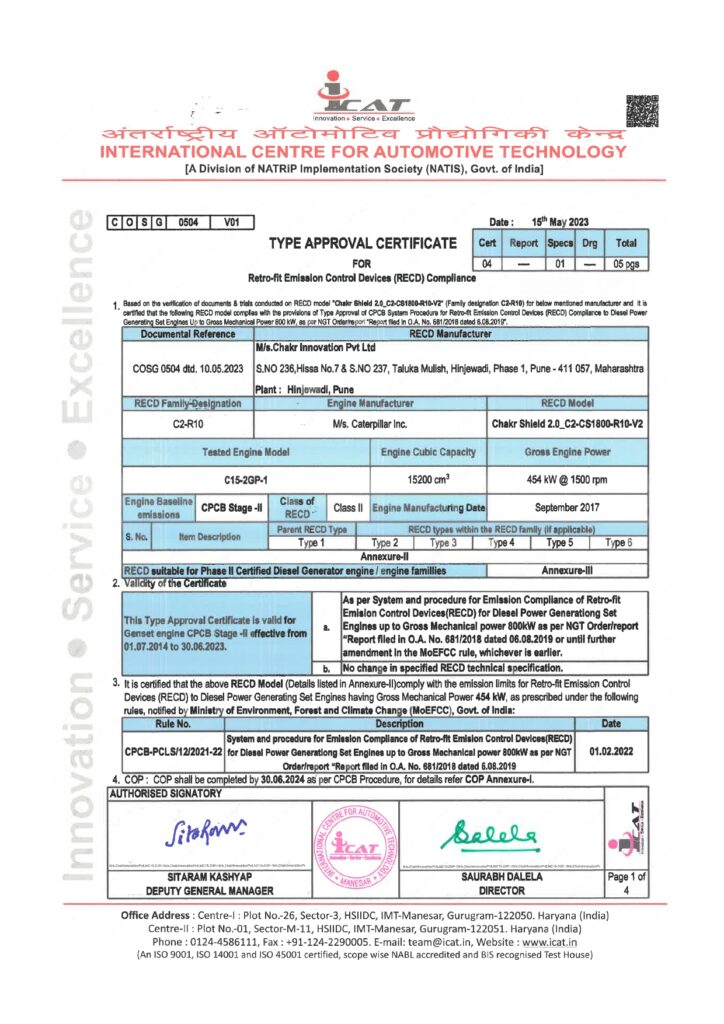
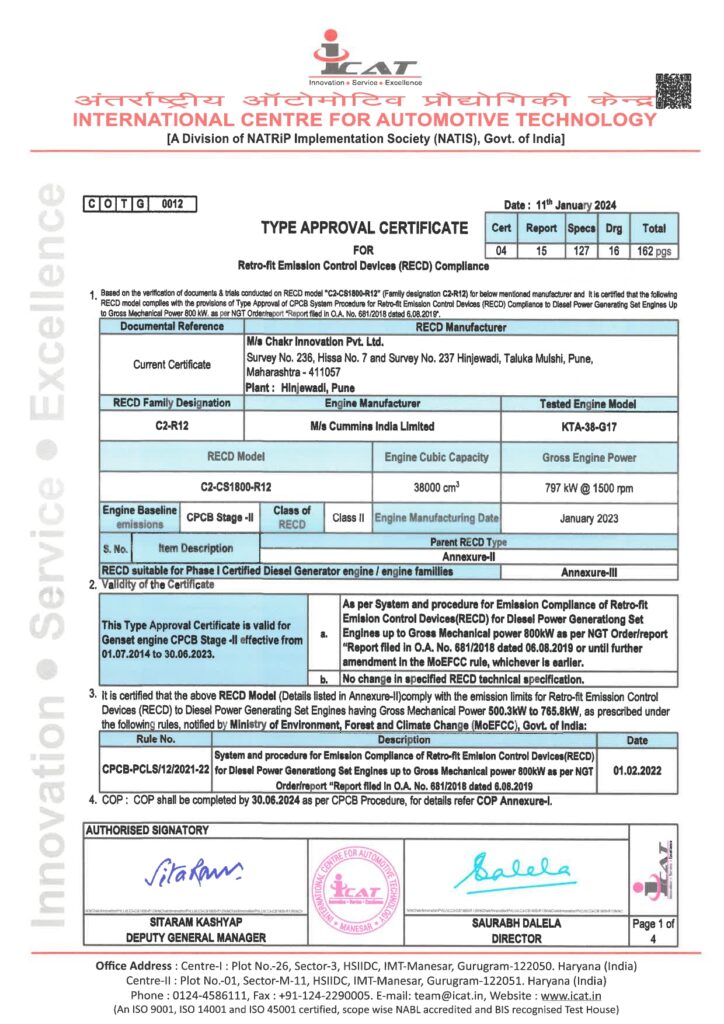
Official CPCB Type Approval Certificates by kVA Range
CPCB- i
CPCB- ii
Type Approvals: Common Questions Answered
What is CPCB Type Approval and why is it important?
CPCB Type Approval certifies that an RECD has been tested at CPCB-accredited laboratories and meets mandated emission reduction levels. Only CPCB Type-Approved RECDs are legally accepted for compliance and exemption from operational bans.
Which labs are authorized for CPCB emission testing?
Testing must be conducted at CPCB-accredited or NABL-certified laboratories such as ICAT, ARAI, or other approved facilities.
What is GRAP and how does it affect diesel generator operations?
The Graded Response Action Plan (GRAP) restricts DG set usage during severe air quality episodes. Only DG sets equipped with CPCB Type-Approved RECDs are allowed to operate during GRAP Stage III and IV
Can diesel generators be shut down for non-compliance?
Yes. SPCBs and CAQM have the authority to order immediate shutdown of non-compliant DG sets, especially during pollution emergencies.
What are the penalties for non-compliance with emission norms?
Non-compliance can lead to financial penalties, DG set shutdowns, cancellation of CTO, legal action, and restrictions.
How can I check the CPCB laboratory certificate for my kVA range?
You can verify CPCB Type Approval by downloading the approval document for your specific kVA range. Simply click on the relevant kVA range to access the official Type Approval file.